
Spring brings out the reproductive urge in the woods where I live. Squirrels, song birds, turkeys and even snakes are actively on the move.
I recently learned that it’s the juicy conditions for nesting in this north country that is the reason birds learned to migrate. I also notice humans turning “to thoughts of love” and trees and gardens sprouting new growth.
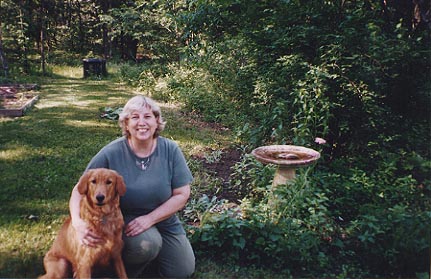
All this made it doubly awful when I had to finish off a mama squirrel mortally wounded by our adolescent golden retriever. Rosie did a good job of catching the squirrel, but a bad job of killing her. I can’t blame the dog who was just being a dog; but that left the human responsible, me, with the dilemma of what to do with a mortally wounded squirrel, obviously a mother.
I did, with tears in my eyes, quickly kill and bury her.
My heart was broken and stayed broken for several days. I told myself the tiny squirrels venturing out of the woods the next day were her babies, but I’m rationalizing.
I hate seeing any creature hurt and dying. I have reconciled myself to deer hunters in our woods since I know without them an overpopulated deer herd would starve, sicken and die. Chronic wasting disease may have gotten an easier foothold because of a weakened, overpopulated deer herd.
The balance of nature is fragile but inevitable. Take the squirrels; a couple of years ago we were so overrun with squirrels I had counted 24 at one time. Then we had a winter with three feet of snow cover throughout the woods for months. Squirrels must have starved in scores because the next spring there were only about three or four.
Last summer the squirrels recovered and, although we are not up to the high numbers, we are seeing a lot of pretty healthy looking squirrels at the feeders again, outsmarting all efforts to keep them away. One squirrel learned to jump from the gas tank to the pedestal feeder.
So why shed a tear for one?
It’s the difference between the big picture and the little picture, the global versus the personal. “Think globally act locally,” say the new ecologists.
Ecopsychology or deep ecology is a new field, a development in the continuum of first understanding our psyche as a self-contained unit to expanding the sphere of influence to include families. Family systems theory maintains an individual is greatly influenced by his or her surrounding family, and the family tends to maintain an equilibrium. This accounts for the puzzling phenomena of one person in a family recovering from alcoholism, say, only to have another family member become ill or problematic in some way.
The next progression, say the ecopsychologists, is that we also cannot separate ourselves from the world around us — we are a part of the total ecosystem. I am to the point now that I can’t throw a glass container in the trash without making the extra effort to find a place to recycle it.
My wildlife conservationist daughter is a source of inspiration. She forced her sorority at UW-Madison in the late 80s to develop a recycling program before it was mandated. She and her husband are also an example of low impact living — driving an old Honda Civic and eating few processed foods.
But I like my SUV, fast food and the conveniences of modern life. Like many people I know I would probably balk at preservation measures that inconvenienced me.
We have not been very good caretakers of our home here on this planet, seeing it mostly as a place for our use and pleasure. I am grateful to that mama squirrel who reminded me that life is short, fragile and very precious, and I am not so very far away from her.
May 25, 2002