“I was flying a Tiger Moth over in the UK”

The Imperial War Museum in Duxford is a former airfield and Bob was in aviation heaven.  We took the tube, then a train to Cambridge, then a 45 minute bus trip to get here. The highlight of the day was Bob’s ride and piloting of a Tiger Moth.

Tiger Moth

Tiger Moth

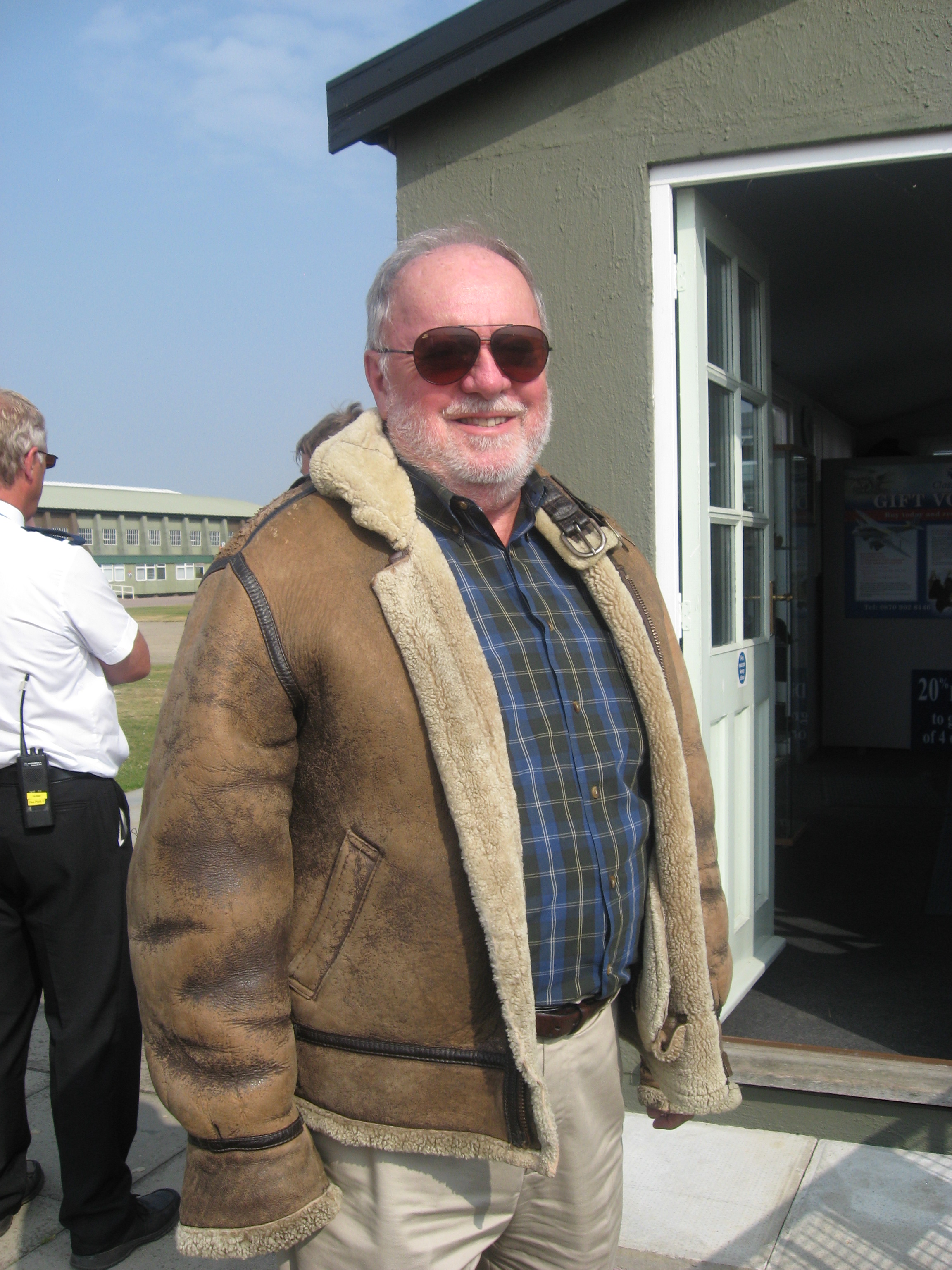
They insisted that Bob wear this jacket – it’s cold up there in the open cockpit, they said.

Capt'n Pike

Capt'n Pike

The ground crew of one was worth the trip. I think England has an abundance of characters.

Click here for the video of some of the ground instruction.  ground crew

IMG_2640Bob said that the “G” means Great Britain. All airplanes have these numbers and the country code. USA is “N”


IMG_2649IMG_2653

You might imagine that an airplane museum needs quite a lot of space. Here are a couple of shots from the American Air Museum building, one of about seven buildings.

IMG_2656

IMG_2658

Churchill Cabinet War Rooms, London

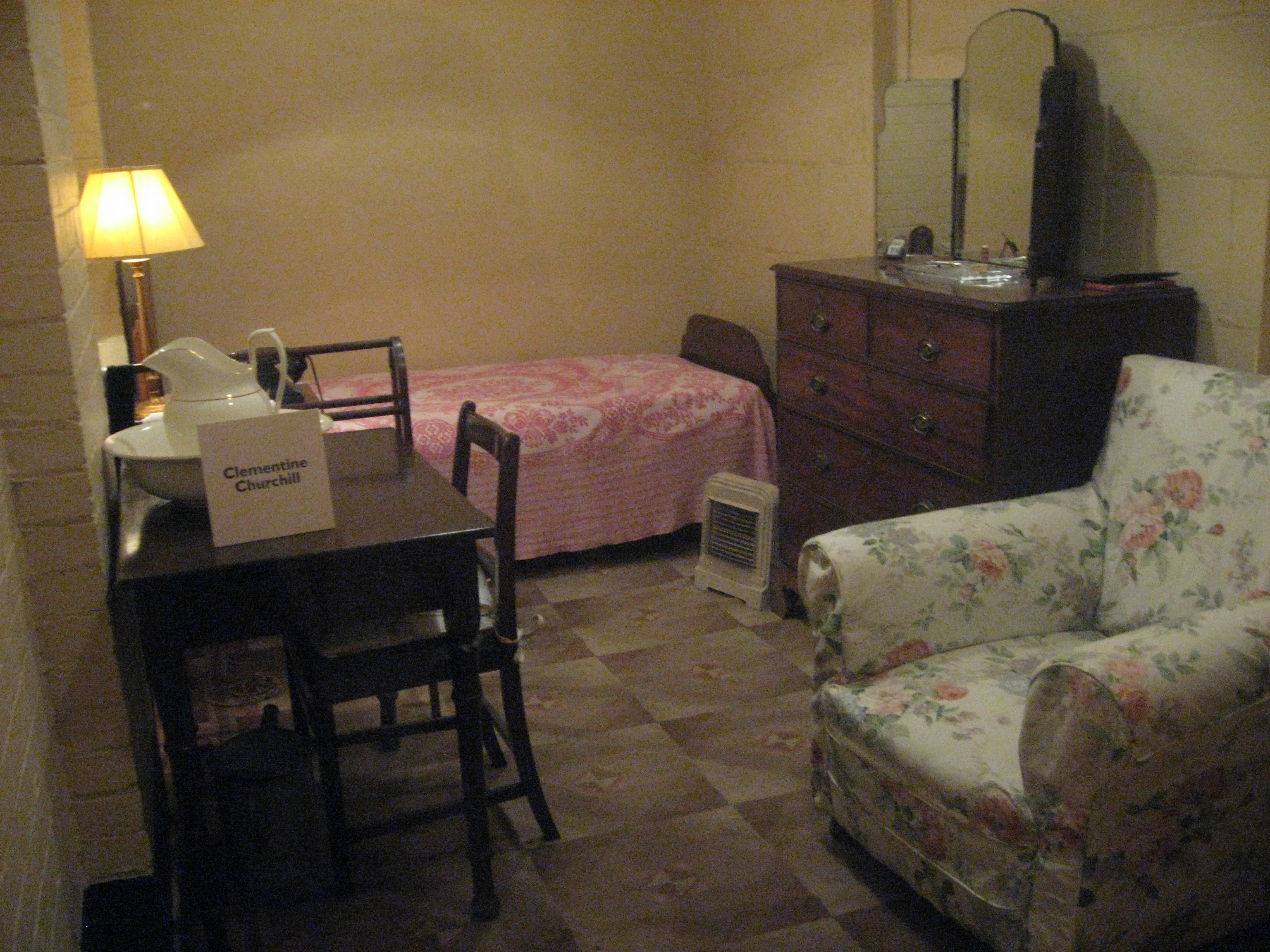
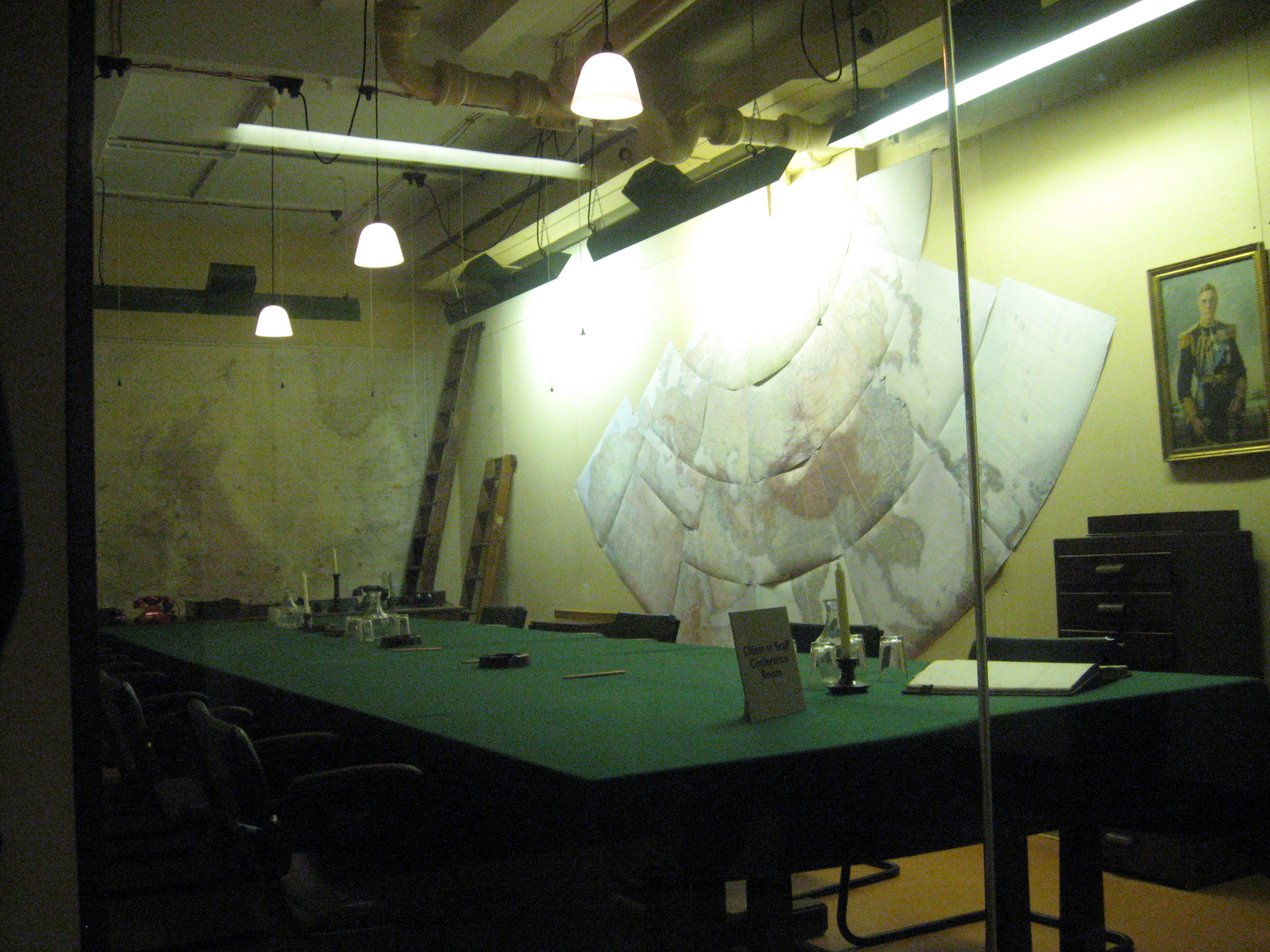
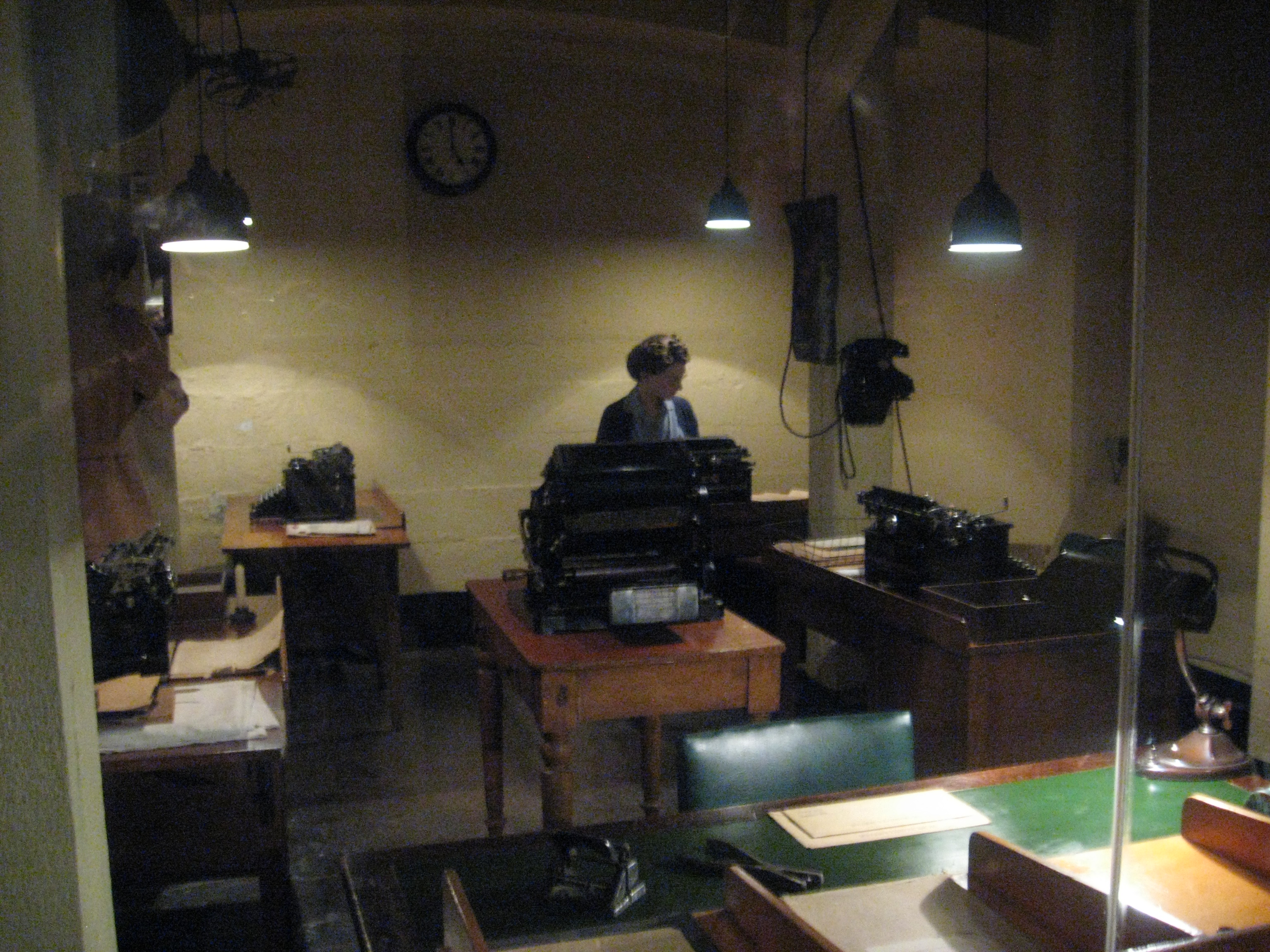
We visited the Cabinet War Rooms, the underground WWII headquarters of Churchill’s war effort. This is where Churchill and his aides and military advisers waged the war and dealt with the bombing of London. The rooms have been carefully preserved.

underground barracks underground barracks
Clementine Churchill's room Clementine Churchill’s room
war room Chief of staff conference room
women typists and secretaries women typists and secretaries

The memory of World War II was present in all parts of England we visited. It was easy to imagine the city under siege. This museum preserves the essence of Churchill’s leadership. Click on the following little movie to hear Churchill’s voice.

Churchill’s voice, WWII


Impressions of England and a quick trip to Paris

Click here for further England/Paris stories and photos
Bob and the paper

Bob and the paper

Here is Bob reading the Telegraph. Every morning he would go down to the Victoria Station Starbucks, right next to the hotel, and bring up croissants, coffee and the paper. We loved reading the paper… seeing the USA from the perspective of the Brits (a little critical of Obama.. we had to admit some of it was accurate). Nearly every paper had the Queen and/or Diana on the front page. The latest thing was the discovery that Princess Margaret had burned some of Lady Di’s letters to the Queen….. hence, front page huge photo and story…. also, note the health care headline.

Trafalgar Square from the bus

Trafalgar Square from the bus

difficult not to be impressed with the beauty of the architecture

difficult not to be impressed with the beauty of the architecture

We had a whirlwind tour of London from the top of a double decker bus with the first of the many good guides we were lucky to have on our trip. We found the English universally good natured, cheerful and possessing a nice, dry sense of humor. They don’t seem to take themselves very seriously, it was quite refreshing and pleasant. A few times I saw a couple arguing, or somebody being sort of grim .. but then, after getting close enough to hear … Italians! or French!

I'm taking the photo, Bob is waving his map....

I'm taking the photo, Bob is waving his map.... this is our tour bus in a mirror window

dinner at Tas Peid,

dinner at Tas Pide, Anatolian restaurant

restaurant across from Shakespearae's Globe Theatre

across from Shakespeare's Globe Theatre

SHakespeare's Globe Theatre

Shakespeare's Globe Theatre

We saw “As You Like It” at the Globe. This theatre was only built in 1997 and is a “best guess” reproduction of the original Globe that was located in this area. It is the only structure in London allowed a thatch roof (for accuracy) since all thatch roofs were banned after the big fire of 1666. We did leave early, though…. jet lagged.


Minnesota political photos

IMG_0259

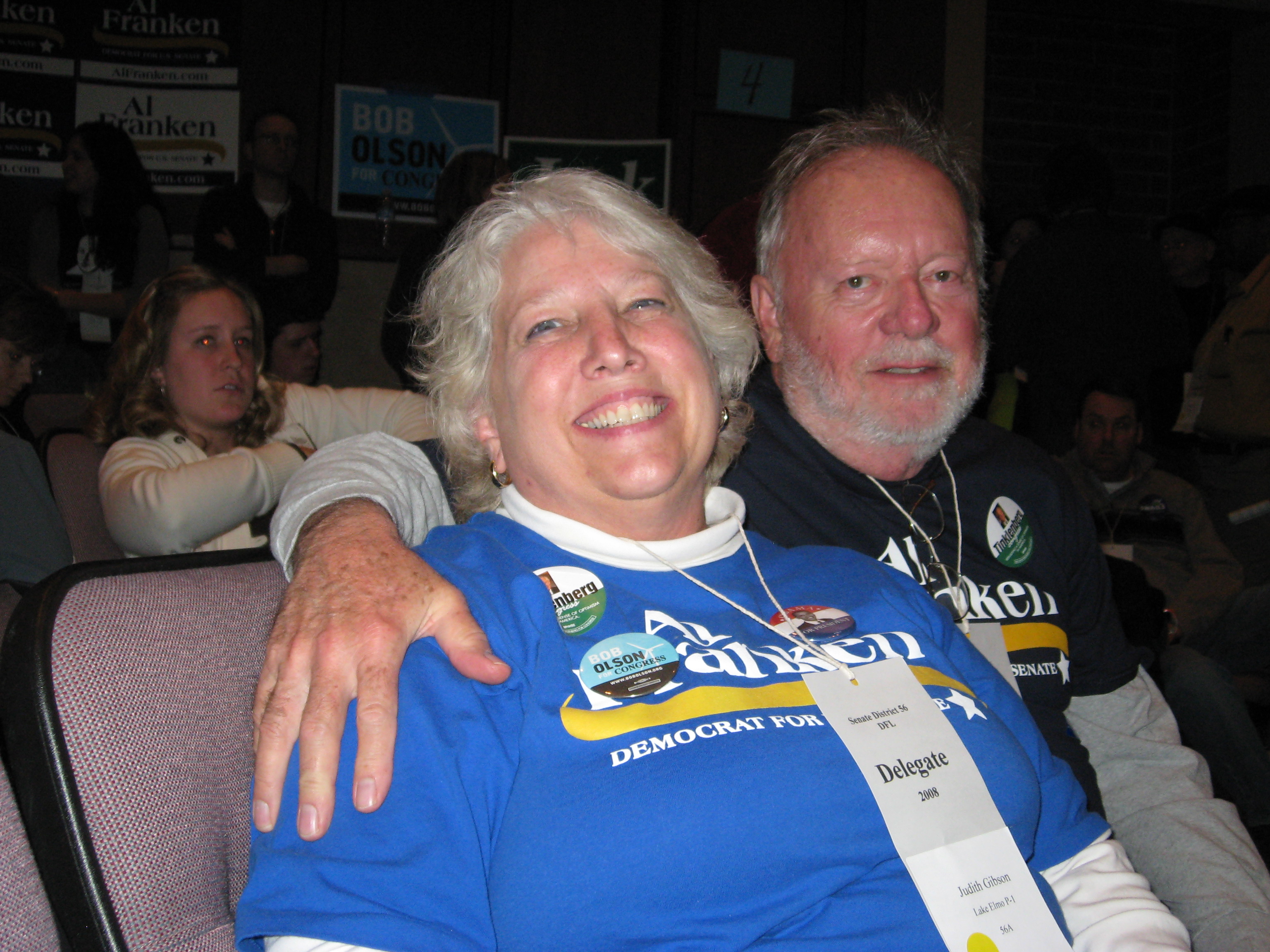
Judy and Bob meet Al Franken October 2007, in the beginning of his run for the US Senate. We had a Franken sign in our yard all winter.

IMG_0272


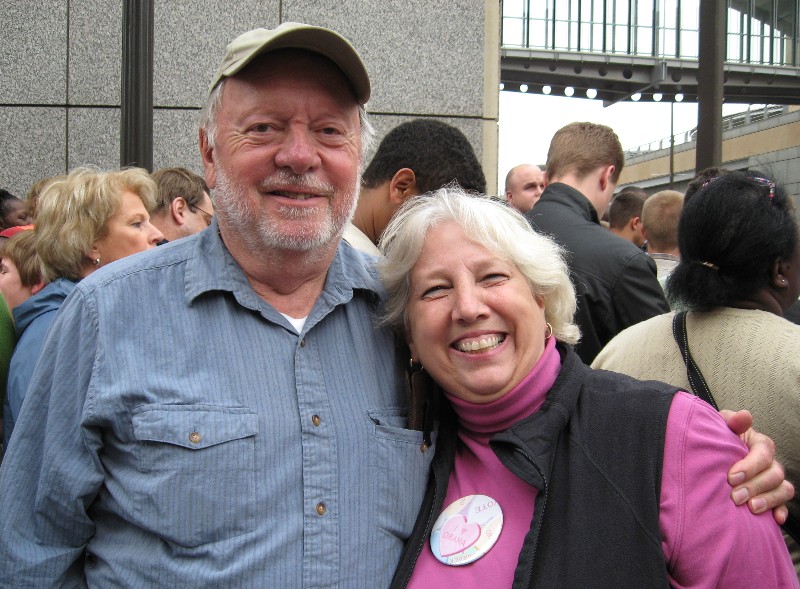
Judy and Bob wait in line Feb. 2, 2008 at the Target Center in Minneapolis to see Barack Obama. Huge crowd. Very exciting.

Judy and Bob wait in line Feb. 2, 2008 at the Target Center in Minneapolis to see Barack Obama. Huge crowd. Very exciting.

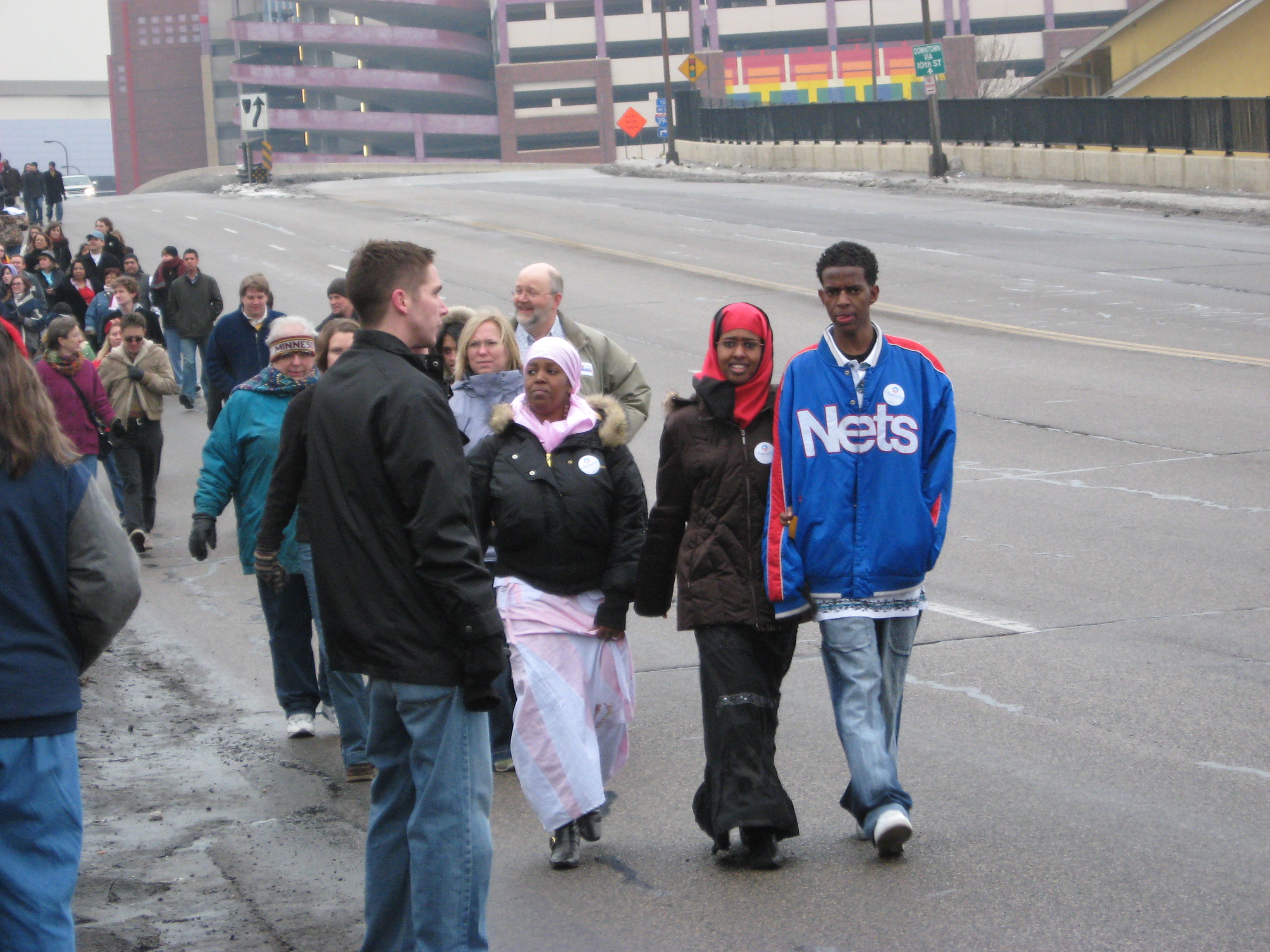
diverse crowd going to the end of the long line to see Obama

diverse crowd going to the end of the long line to see Obama

IMG_0619

Definitely a feeling that this was possible, so articulate and charming. At last a Democratic candidate with charisma!

Definitely a feeling that this was possible, so articulate and charming. At last a Democratic candidate with charisma!

District 56 Convention in Stillwater, MN March 8, 2008.

IMG_0829

caucus for Franken

caucus for Franken-out of Iraq - well, that's how it went... very complicated. Everybody has 15 minutes to move to where they want to be counted.

started our causus here

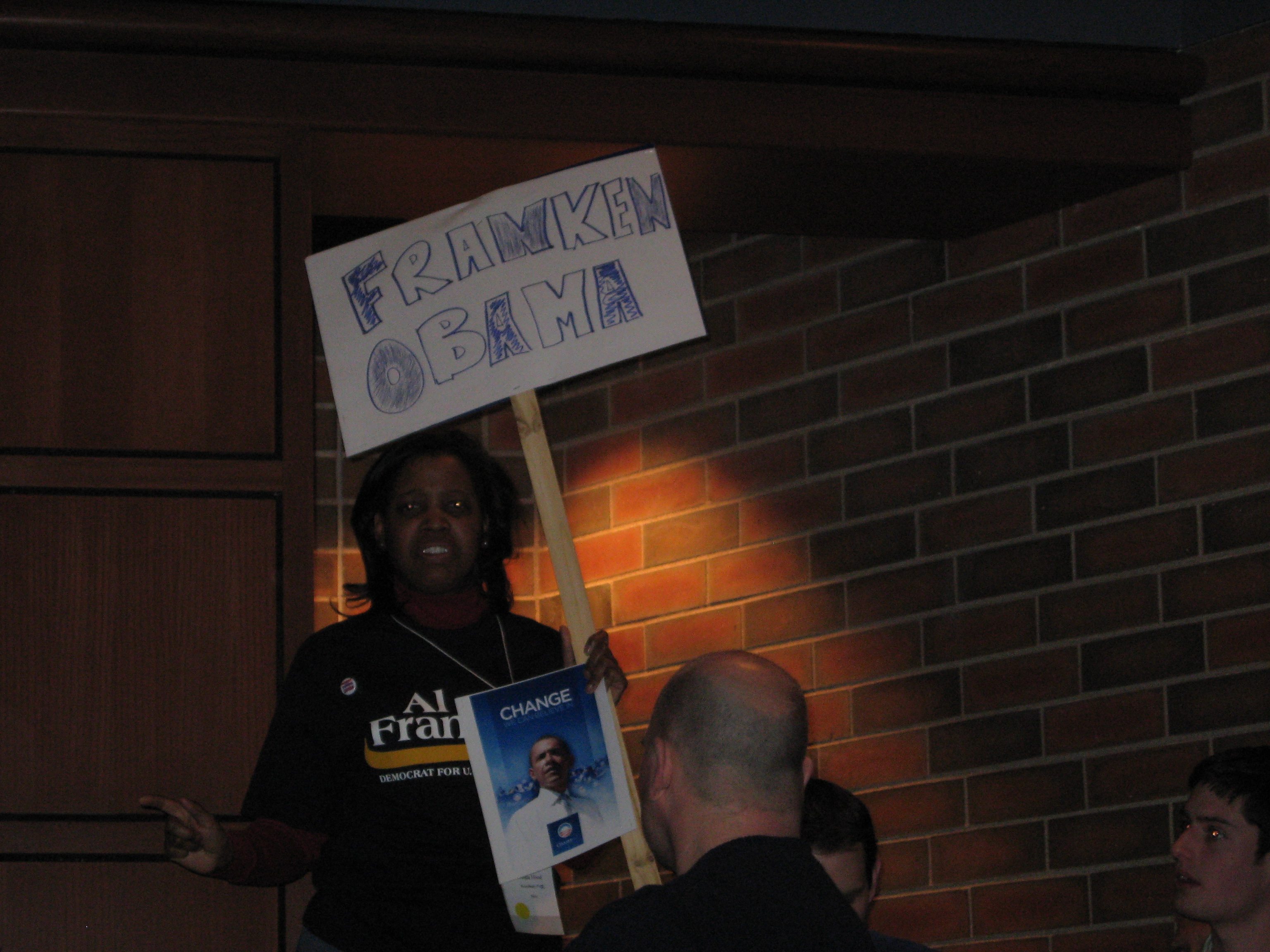
started our caucus here - Franken-Obama

Franken at our Dist. 56 Convention

Franken at our Dist. 56 Convention

Counting - very chaotic... this is what Minnesota has instead of a primary!

Counting - very chaotic... this is what Minnesota has instead of a primary! We did endorse Franken sending a good contingent of delegates pledged to Franken to the State convention. Bob and I passed on trying to be a state delegate, this was sufficient craziness for us.

June 4, 2008, Obama secures the nomination, major celebration in St. Paul, thousands of people

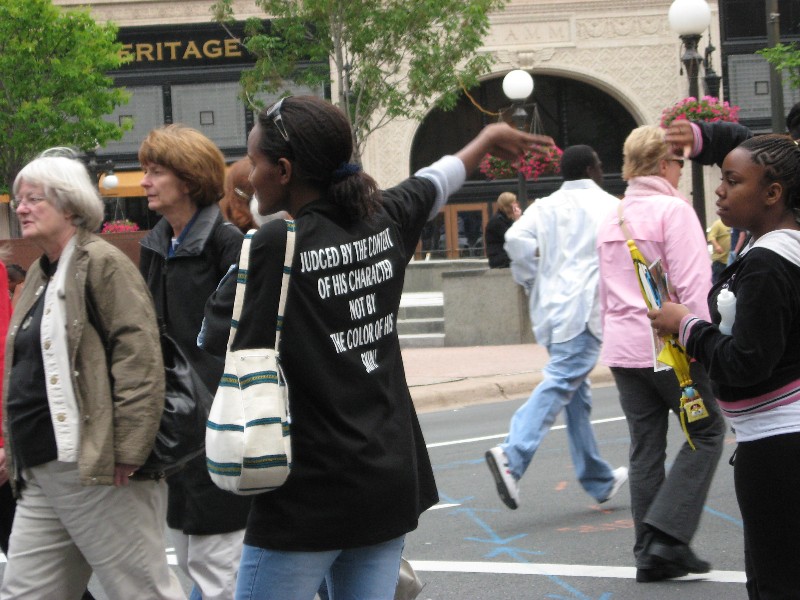
 Barack and Michelle Obama come to St. Paul to announce that he has enough votes to secure the nomination.

Barack and Michelle Obama come to St. Paul to announce that he has enough votes to secure the nomination.

content of his character

content of his character

One way

Obama, One Way

The black mother waits with her boy

Saw to it they got there early

Bought the shirts

Saw to it he would be there.

That he would remember.

Young, professional black man waits

Calmly, arms folded,

His tie just so, his suit and stylish vest.

Also came early to make sure.

White guy brought the book, reads as he waits.

Jumble of faces waiting,

All breathing in this time.

This is our moment, he would say later

In the vast arena.

This is our time.

Hope and change, but more than that,

A seismic shift, templates move,

It is different.

One way, reads the sign.

Obama in St Paul

Obama in St Paul


Michelle listening.
Michelle listening.


Get out the vote effort, calling, and signs in the yard

IMG_1594

The rest is history now — so nice to work on a campaign and WIN!!!!

Even Franken, although that took a few more months (understatement)

Our local state legislator, Julie Bunn, also won re-election.

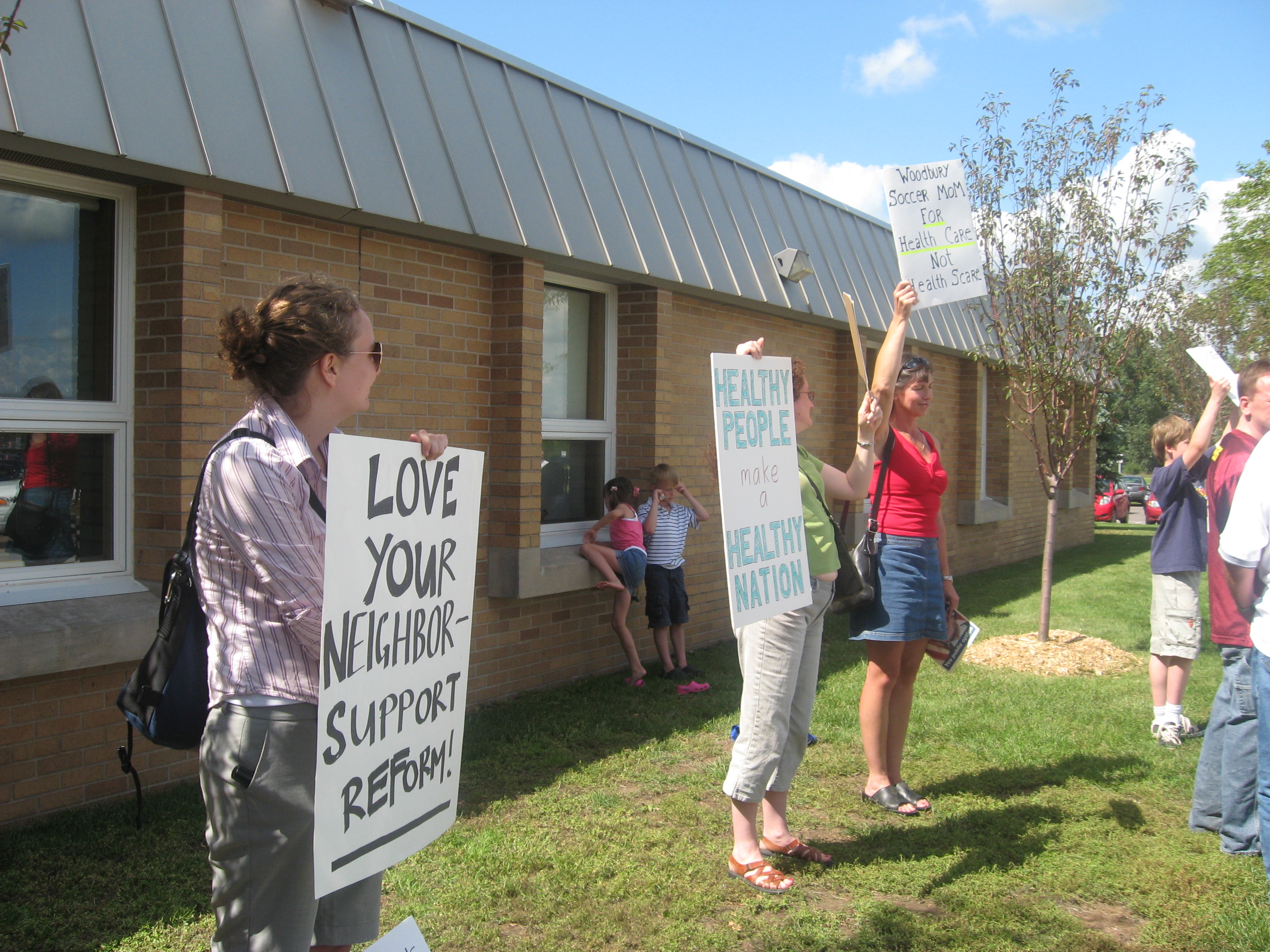
But the work is not over, just a little rest — we had to show up at the town meeting for our crazy person Rep. Michelle Bachman to urge health care reform. August 27, 2009

supporter of healthcare for all on stilts

Woodbury soccer moms for health care reform

Bob holding the "remember Teddy" sign I made
Bob holding the “remember Teddy” sign I made

The beat goes on.

Handling Anger

There is nothing more troubling to families than how to handle anger, especially here in the Midwest. It seems like people in other cultures, unlike our German, English and Scandinavian ones have an easier time acknowledging and expressing anger—I think of the stereotypes of expressive Italians or passionate Greeks.

I know when I lived in New Mexico the demonstrative Spanish culture was a little disconcerting to this Midwestern shy one. We are taught to be nice and get rather flustered when it comes to being angry. I always liked Garrison Keillor’s description of us – “God’s frozen people.”

But anger, an emotion like all the others, is often there for a purpose, alerting to us to a personal injustice perhaps, helping us feel that a boundary has been violated or giving us energy to do something that needs to be done.

If a child is raised in a family that never shows anger, he or she does not have a model of appropriate expression and handling of this universal emotion. Anger can be a frightening feeling if there is no way to deal with it or to express it. Also the sight of someone very angry can also be scary.

I worked at an agency that had parenting classes for parents who were abusive towards their children. One exercise had the parent sit on the floor while the teacher stood over him or her and pointed her finger and yelled. This gave the parent an experience of the power of size as well as the terrifying expression of anger.

There is no question that anger can be dangerous, and that’s perhaps why we stifle a child’s expression—and our own. If we don’t learn positive ways to assert ourselves we can get to a breaking point with anger that’s been stored up and then comes out in a rush.

Couples struggling with domestic violence see this pattern in the aggressor who stores it up and then acts it out with explosive and dangerous violence. Abusive partners and parents need to learn techniques to deal with anger since it is part of the human condition and it is unrealistic to expect ourselves never to be angry.

It is often a shock to first time parents when they have feelings of anger towards this teeny baby as well as feelings of love. When you have done absolutely everything you can think of for a baby and he or she is still crying in distress, it can make you frustratingly angry. At these times it is helpful if there is a friend or relative to take over for awhile.

When I lived in Minneapolis I had a friend who, after years of not being able to conceive, had her first baby who had a terrible case of colic, driving her to distraction. One day she showed up on my doorstep. She was weeping and the baby, too, was crying. I took the baby from her arms and led her to a bedroom where I put her down to sleep, covering her with a quilt and closed the door. I then set about doing what I could to calm a colicky baby—which is often not a thing. He did eventually calm down and slept a little in my arms—she slept solid for two hours.

Buddhist monk Thich Nhat Hahn has a wonderful teaching about anger. He says it does no good to try to deny it or to stifle it. Instead he recommends recognizing the anger, but refraining from doing or saying anything while one is in an angry state. Otherwise, he says, we may do things we are sorry for later, requiring an apology. He asks us to breathe through the anger. “I breathe in, knowing I am angry—I breathe out knowing I am still angry—breathing in, I am still extremely angry—breathing out the anger is there, and on and on until the anger begins to be transformed.

At this point we can decide if we want to do something, coming from a reasoned assessment. It is the meditation equivalent to taking a timeout, a walk around the block or counting to 10. It is also an illustration of what anger is all about—it is a personal response. What makes me angry may not make you angry. And often anger is triggered from a misunderstanding.

I also think that if we look behind what is making us angry we usually find a hurt. The parent is angry because he is frightened for a child, I am angry because what you said hurt my feelings.

Good communication in families about everything can lessen misunderstandings and hurt feelings and help repair damage.

Jan. 5, 2001

Parents can trust themselves

If I had a New Year’s resolution to give every parent it would be to trust yourselves—you know more than you think you do.

Over the holidays I met a couple of new babies. One only four weeks old, was leading his parents a lively chase by feeding frequently. The issue came up of whether it is possible to spoil a baby by picking him up too much.

I remember well when my son, like this one, wanted to breast feed every two hours, day or night. A young and very inexperienced mother, I agonized about picking him up all the time and worried that my milk supply would adjust to these frequent feedings, creating a vicious cycle of less milk and ever more frequent feedings.

Looking back the only thing I would have done differently is to have stopped worrying about it, allowing me to pick him up and feed him as much as I wanted without guilt.

The infant support program I was a part of in New Mexico was in the business of reassuring new mothers and fathers that it is impossible to “spoil” an infant, and the best advice is to trust maternal and paternal instincts. Mothers have been responding to baby’s cries for thousands of years and the built in response that strikes that inner cord and says “my baby is in distress” can be relied upon.

Now this doesn’t mean that you always respond quickly to a baby’s cry. As time goes by a parent will learn that a baby who has a little fuss in the middle of the night, if left alone for a bit, may just be semi-awakening and will go back to sleep. The key is to trust the instinct.

When a baby is older–six months or so, and your instinct now tells you that this cry is different, maybe it feels a little manipulative or demanding when everything should be fine, then you might get a little more suspicious, but here again, a trust of what a parent “knows” will work, judging by the sound of the cry. Sometimes everything should be fine but lo and behold- teething–baby in distress because of mouth pain.

It does not harm an infant to be carried around and held all the time. We know many cultures that strap the child to the mother’s body following birth. In this culture Mom, of course, needs a break and some sleep. That’s why we have dad’s and grandmas and aunties. A very young infant operates out of a primitive feedback system that doesn’t distinguish caretakers. By three or even two months, the baby begins to distinguish mom from not mom but especially in those early stages the distinction is between comfort and distress.

The resolution to trust yourself as a parent doesn’t stop in infancy. From advocating for your child with a coach or teacher to being suspicious of a tale a teenager is telling you about where she is going–trusting your instincts will get you through.

There is one important caution, however, and that is to be careful of doing or saying something in a state of anger. Handling one’s anger with children is an important skill and a topic for another column. Suffice it to say that if a parent is angry, a deep breath and a time out of some kind should be undertaken before any action.

There is no shortage of advice for parents these days, but as I look back over my life raising two children and thinking about all those families I have worked with, the times we didn’t trust what we knew was true in our hearts were the times we made mistakes.

Dec. 29,2001

Life is difficult

I always liked the way Scott Peck started his book “The Road Less Traveled.” He quotes the Buddhist first noble truth, “Life is difficult.” I have been doing some reading lately along these lines and it has me thinking about happiness and sorrow and how the distribution of these two things seems so arbitrary and unfair.

Sometimes the “best” people seem to get the toughest luck, and bad luck can run in bunches. Others seem to live out their lives charmed with plenty of money, interesting work, a good marriage and healthy kids.

Still, I know even those who seem blessed suffer sorrow and loss. All relationships end if only by the death of the loved one.  Dashed hopes and disappointments come to everyone.

I never thought I would spend my late 50s writing for a little paper in Wisconsin Dells and living with my aging Dad. I always thought I would be still married, glorying in grandchildren and looking forward to retirement with a hubby at my side. The blessings of this time of my life are abundant, but not what I had expected. It was John Lennon who said, “Life is what happens when you’re busy making other plans.”

I noticed an announcement in the Portage paper for new support meetings starting up in Reedsburg for those going through divorce.

Even though I have been divorced (twice, if truth be told) for many years, I still remember the pain and agony of ending a supposedly permanent relationship. It felt like the epitome of bum deals. Marriage was supposed to be a refuge, a buffer between me and the rest of the world, not the cause of almost unbearable pain. Add children’s pain to that and the unbearable part approaches the critical point. I remember often the only thing that kept me going at those times was the realization that my children needed me.

“Life is difficult.” Yet we are always thrown for a loop when it is and there’s no time off for good behavior.

But this noble truth is the BEGINNING of Peck’s book and it’s the FIRST noble truth. It is a starting point to help us see that the world does not owe us anything, and we can go on from there.

So what, exactly, is the point? Buddhists would say we all have a “Buddha nature” within that is like Buddha who found enlightenment meditating under a Bodhi tree-the ability to be at peace with how things really are—good or bad, painful or ecstatic. In addition we all have the opportunity, despite it all, to further peace and harmony in the world around us. Christians say Jesus told us we can all be like him, an example of unconditional love and spiritual peace.

Every day we have choices about how we will behave and how we will treat others. When I counseled people going through painful relationships, perhaps trying to decide whether to end it, I used to say, “Love is not something you feel, it is something you do.”

Whatever decisions we make, whether in our own best interests or those of others, if we come from a loving place, I don’t think we can go wrong. That includes a loving perspective towards ourselves.

I ran across this quote from Lao Tsu; a good one, I think: “I have just three things to teach: simplicity, patience, compassion. These three are your greatest treasures. Simple in actions and in thoughts, you return to the source of being. Patient with both friends and enemies, you accord with the way things are. Compassionate towards yourself, you reconcile all beings in the world.”

Jan. 12, 2002

Uncle’s death and a sense of home

We’re having another funeral in my family and with it the passage of the generation before mine continues.

My uncle with his puns and quirky jokes is gone. I will miss him. One of those jokes, a typical one, I remember he told me when I was little—“Hide, hide, the cow’s outside.” I took me quite awhile to get it.

Those memories of my childhood, looking up to the adults, my mother and father, my aunt and uncle; and fun, worry-free times with my brothers and all my cousins and relatives—that family has changed.

Now I am more and more the senior generation, the mature generation. I always thought of myself as middle-aged, but as Meryl Strap said to Shirley MacLaine in “Postcards from the Edge,” “How many 120-year-olds do you know?”

I called my uncle my biggest fan because when I came back here to write for the paper he would comment about how many stories I had in each issue. He called it the Judy Gibson Events.

What a privilege it is to live in a place where my family is around me, where we are together, in sickness and health, in birth and death. Just a few weeks ago I was writing here about a brand new baby who was the most recent of his great-grandchildren.

When I visited England a few years ago I remember feeling impressed with the sense of history there—how old it was, the sense of things in a continuum through many ages. America seemed young and brash in comparison.

But here in the Wisconsin Dells area many of us have a sense of history, of deep roots from ancestors who came here as immigrants generations ago. When I decided to move back here from New Mexico my friends there told me they were jealous that I actually had a “home place” to go back to. Santa Fe, like many places, has a big population of newly arrived people, many of
whom do not stay long. I also had an Ojibway friend in Minneapolis who said it is natural to heed the call to return, eventually, to where one was born.

So, as sad as this death is—the passage it marks for all of us—I treasure all the time I have had here. Although I didn’t grow up here my Dad did, my grandparents were always here, and times spent in the Dells as a child are some of my fondest memories. My uncle was a part of that.

Jan. 19, 2002

The Joys of a single woman’s bed

bed

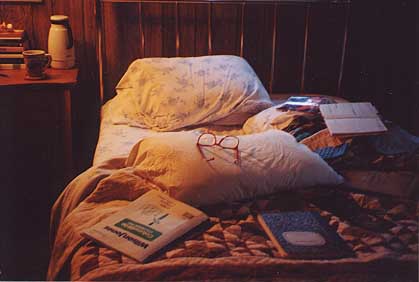
On cold snowy winter days (and most other days, too) my favorite possession is my bed. I have created a little nest or haven away from the rest of the world with flannel sheets piled high with quilts and pillows. For those of us who sleep alone except for the occasional pet, the bed, without it’s other connotations, can really become the best place – the all-purpose home base. I always thought the Victorians had the right idea when women “took to their beds” as a cure for almost everything.

I have two friends named Ann and Anne, both ladies in their 60s, both of whom sleep alone. Anne has a dog, Wallace, who is an occasional bed partner and Ann has a cat named William. This is the truth, I swear.

Both of these women, and I, have perfected the art of the single woman’s bed. Far beyond the simple uses such as the best place to read a book, we also pay bills, drink coffee, talk on the telephone, write, occasionally eat breakfast and, if we’re really feeling decadent, also lunch and dinner. As yet I don¹t have the television there, although Anne has her’s where she can see it from her bed. I think that would probably be dangerous for me.

I was heartened and encouraged to come out of the closet on the pleasures of my single woman’s bed by a story in Vogue magazine awhile back about some society gal who conducted all her business and created artwork from her bed. Included in the article was a photo of her in her luxurious bed talking on the phone, wearing a handsome bedjacket. I’m not sure if she also entertained from her bed too — and let me hasten to add that she was not disabled, nor are the Ann’s and I.

The design and makeup of the bed is important. It should be just the right softness or firmness — I like cuddly on the top, firm underneath, so I added one of those foam things under the mattress pad. Then for me, heavyweight covers are best. Flimsy down comforters are not as good as several blankets or quilts. Sheets, preferably 100% cotton, flannel in winter, percale in summer with a high thread count. Looks are not as important as comfort but a pleasant bedstead and all purpose bedside table or dresser one can reach without getting up is essential, as is good lighting.

I have noticed my married friends don’t have this same need for bed perfection. Sharing the bed means compromising on preferences for that as for other things in marriage. My daughter, for example, loves to read late into the night. Her husband zonks as soon as his head hits the pillow and doesn’t appreciate the lights on all night. We got her a book light when I was there visiting — creative compromise.

At this stage of my life I have vowed to appreciate that which I have and not waste time hankering after that which I don’t. Of course I would prefer being in a wonderful marriage, but since I’m not, there are a few things I can have instead — one of them is my own bed.

Jan. 26, 2001

The black Oscars, consciousness raising and oppression

It was African American night at the Oscars — and I loved it. From the emotional Halle Berry best actress acceptance breakdown, to Whoopie Goldberg’s jokes and on to the measured, solemn speech from Sidney Poitier about the long upward journey of blacks in film, the celebration of African Americans in the movies reigned supreme.

Berry’s honor was indeed a breakthrough as the first black woman to win the best actress award. “Monster’s Ball” is a story about a death row guard who falls in love with the wife of a man he executes. Critics have commended both Berry and Billie Bob Thornton, who plays the guard, for performances that avoid racial cliches.

Best actor, of course, went to African American Denzel Washington who played a veteran cop training a rookie on LAPD’s tough narcotics beat. I loved Whoopie¹s kidding about the black issue, saying African Americans had something to say about Robert Redford’s career such as movies  “Jemimah Johnson” and “The Way We Wuz.”

A discussion the next day with friends about the awards got me to thinking about the whole issue of privilege and the oppression that still exists in our society. Why was it such a big deal that Berry broke down, crying so hard she couldn’t speak?

I remember well a period in my life when I realized some of my suffering was not mine alone, not personal, but because I was born a woman.

In the 60s and 70s the National Organization of Woman (NOW) made available across the country materials for women to set up their own consciousness raising groups. I set up one of these groups, bringing together friends and acquaintances to participate in exercises and discussion of the realization of things in our life that reflected discrimination and prejudice about
women.

There was a term, “the click,” that was used to describe those moments whenas a woman we “got “ it — when we realized something that just happened was the result of discrimination.

We were pretty angry in those days, I remember, when we realized that the only careers we even considered were teacher or nurse, when we watched a man move up even in a small restaurant business to make more money than the woman who started at the same time with the same qualifications, and when someone made a depreciating sexist remark. I’m afraid our poor husbands got the brunt of it, and it really didn’t belong to them. Although you can bet
there was some male consciousness being raised just living with us.

Discrimination and prejudice is not limited to people of color, women, and other “minority” groups. I have a dear white male relative who is pretty sure he didn’t get into medical school because of “diversity” preferences for admission. And there is the more recent realization that fat people are denied equal treatment in many ways.

Any time something happens, or someone makes a comment that reflects an assessment based on stereotype, it is grist for consciousness raising. It is difficult to go through life seeing everyone who crosses our path as the unique individual he or she is — to take the time to make a reasoned assessment and not a hasty judgement. It’s difficult, but not impossible.

I lived for a time on an Indian reservation in New Mexico and had the experience of being a true minority with my blondish hair and blue eyes. I made many faux pas there and for the most part people were kind and understanding, treating me better than many of them were treated in the mainstream.

But I will never forget the few times I was shunned just because of being white. The tribe had just gone through a bad experience with another white woman who had ingratiated herself into their lives and then went off to write a book they saw as exploitive. I wasn’t that women, but I had the same first name. I remember wanting to shout “It wasn’t me – that’s not what I’m like.”

All these are valuable experiences that have given me compassion for those who’ve suffered much more than I and for generations, fighting prejudice that limited them in obvious and subtle ways.

So I agree with Halle Berry who said through her tears, “This moment, this moment — is so much bigger than me.”


April 6, 2002